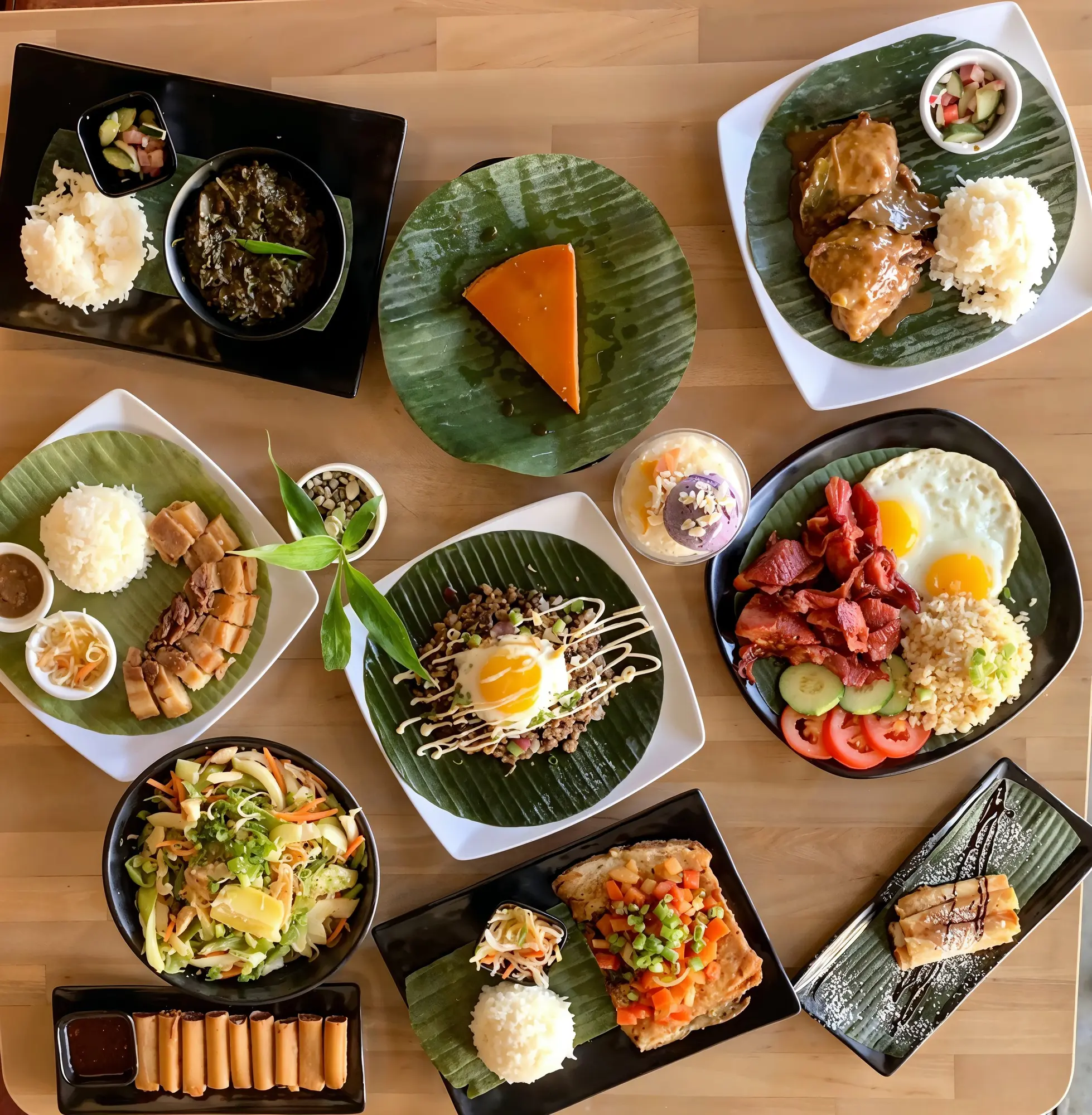
The first Filipino menu can look larger than it is. There are noodle dishes, rice plates, stews, fried pork, milkfish and names that offer no clues in English. Trying to decode everything at the counter only makes lunch harder.
At Tambayan, I would order by texture. Something crisp. Something saucy. Noodles or rice. One vegetable dish. Dessert after the plates are cleared. That is enough structure for the table to begin teaching you the cuisine.
The first plate should make noise
Lumpia arrives crisp and familiar. It gives everyone something to eat while the rest of the order comes together. Dip it, pass it and do not make it carry the entire introduction.
Add pancit for the middle of the table. The noodles soften the transition between fried food, meat and the sharper vinegar notes that run through Filipino cooking.
Choose one slow flavor and one crisp edge
Pork adobo is the first stew to know: soy sauce, vinegar, garlic and onions cooked until the flavor has moved into the meat. Lechon kawali answers with the crackle of fried pork belly.
Laing brings taro leaves, coconut milk and chile. I like it beside the pork because it changes the pace of the meal and shows how coconut can be savory, warm and quietly hot.
Dessert needs a mixing spoon
Halo-Halo means mix-mix, and the name is an instruction. Reach the spoon to the bottom and bring the shaved ice, milk, beans, fruit, coconut and ube upward.
The glass changes with every spoonful. That is why it belongs at the end of a shared first visit: by then the table has stopped trying to identify every ingredient and started enjoying the combinations.