Filipino cooking carries Austronesian foundations, Chinese trade and migration, centuries of Spanish colonial rule, American occupation and strong regional identities of its own. A menu that looks eclectic is often showing that history.
Vinegar is a practical clue. It preserves, sharpens and balances rich meat. Coconut milk changes the texture of greens and stews. Rice holds the meal together while crisp frying supplies contrast.
How it tastes
Filipino, in four cues.
Sour
Vinegar and citrus keep braised and fried foods alert.
Savory
Soy, fish sauce and long cooking build depth.
Coconut
Milk and flesh bring richness to vegetables, stews and sweets.
Texture
Crisp pork, soft rice, noodles and chewy dessert ingredients may share one meal.
At the neighboring table
How Filipino differs nearby.
Unlike a Mediterranean mezze, a Filipino table often organizes itself around rice and several ulam, the dishes eaten with it.
Halo-Halo and Persian saffron desserts are both layered with history, but one depends on mixing many cold textures while the other often concentrates aroma in rice, dairy or syrup.
Dish histories
The stories carried by Filipino food.
Adobo
The Spanish name was applied to an Indigenous technique of cooking with vinegar. Filipino adobo is not the same dish as Mexican or Spanish adobo.
Pancit
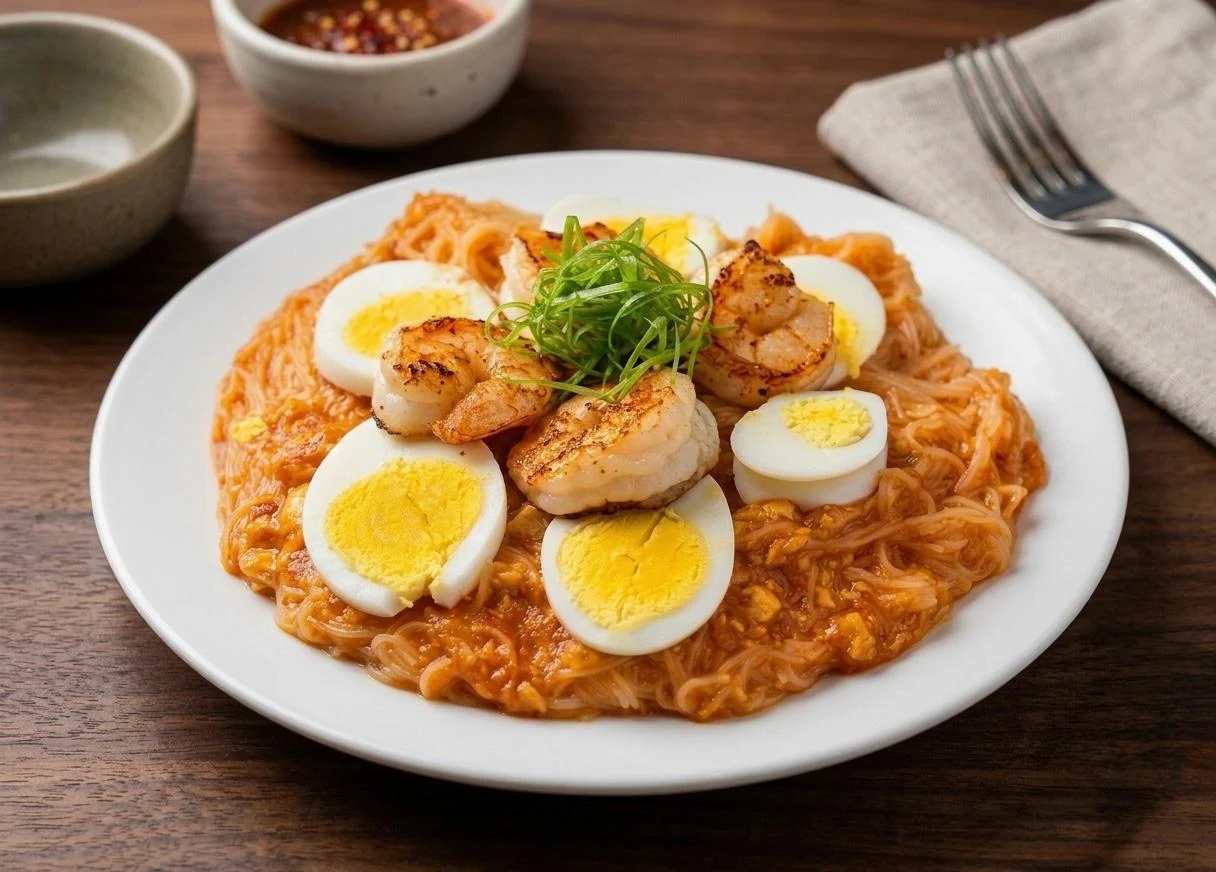
Noodles arrived through Chinese connections and became thoroughly Filipino, with regional forms built for birthdays, gatherings and everyday meals.
Lechon Kawali
Pork belly is boiled or seasoned before frying, creating the soft interior and brittle exterior that define the dish.
Halo-Halo
Shaved-ice desserts traveled through Asian trade and colonial history. The Filipino version became a changing mixture of ice, milk, beans, fruit, jelly and ube.
Twenty stories connect food history to menus in Sonoma and Marin where these dishes can be ordered today.
Open the dish index ↗First visit
Your first Filipino table.
- Lumpia Shanghai
- Pork adobo
- Lechon Kawali
- Laing
- Halo-Halo, mixed from the bottom
Where to try it