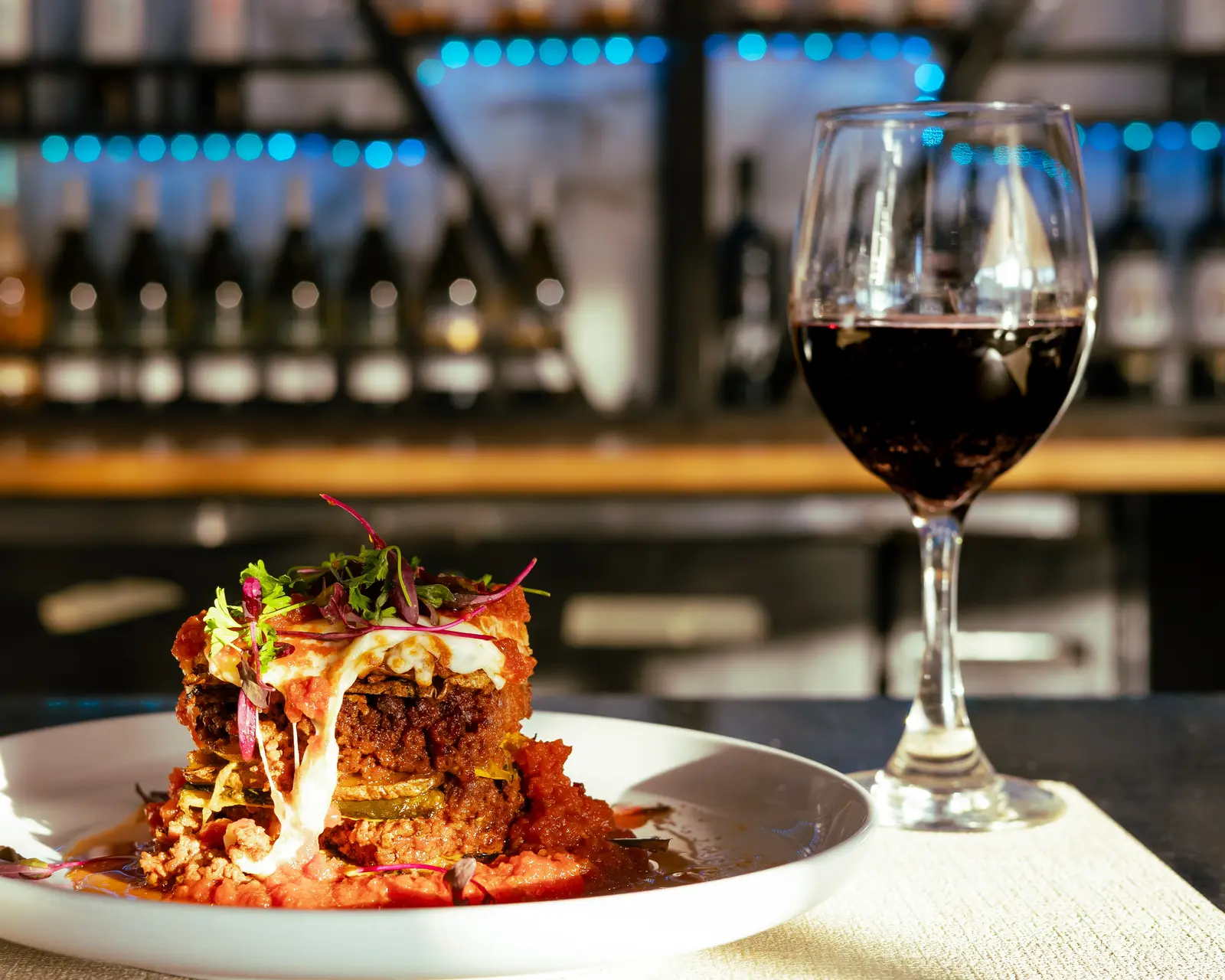
Moussaka enters the dining room quietly. No flame, no tower of garnish, no theatrical pour. Then the fork passes through browned béchamel, a soft layer of eggplant and a dark, spiced filling, and the work inside the dish becomes clear.
The name travels across the eastern Mediterranean. Greek moussaka is usually the baked, layered version Americans know best, but related dishes appear from the Balkans to the Levant. Some are built with potatoes, some with zucchini, and some arrive more like an eggplant stew.
The layer that changed the dish
The plush béchamel cap associated with modern Greek moussaka became prominent in the twentieth century. It gave a home-style eggplant dish the clean slice and burnished top that now make it instantly recognizable.
Underneath, the balance matters more than height. Eggplant should be tender without dissolving. The meat needs warmth from spice, not blunt heat. The top should hold when cut and relax on the plate.
Why it tastes better after a pause
Moussaka is one of those dishes that benefits from waiting. Resting lets the layers settle and the flavors stop competing. That is why the first bite often feels composed rather than merely hot.
What to notice
- A browned, savory béchamel top
- Eggplant that still has shape
- Warm spice rather than chile heat