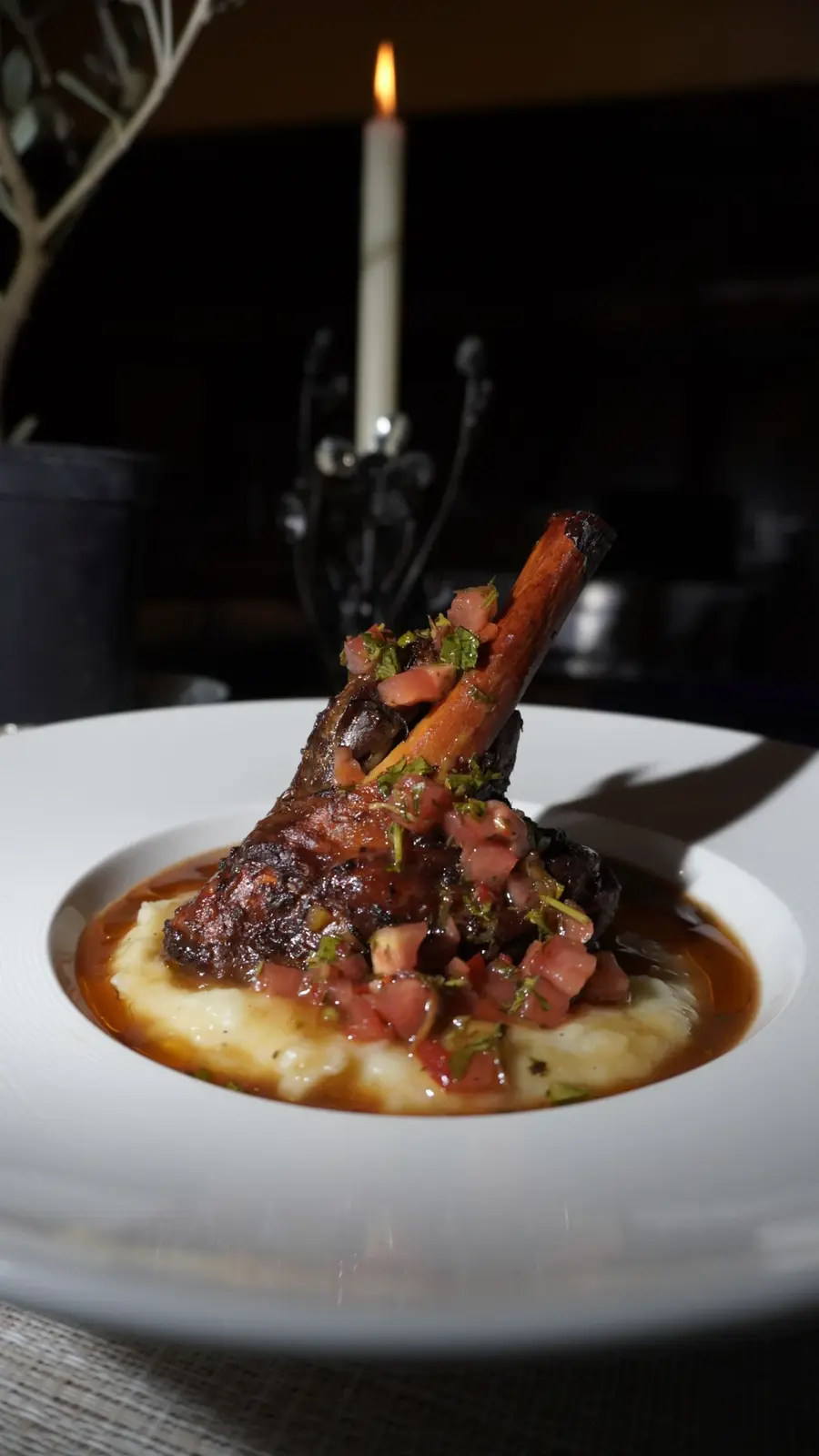
The shank comes from a part of the animal that did real work. Cooked quickly, it argues with the knife. Braised for hours, the connective tissue softens and the meat begins to leave the bone with almost no persuasion.
That transformation explains why lamb shank appears in so many cooking traditions. The seasonings change—wine and herbs, tomato and warm spice, saffron and dried lime—but the method respects the same stubborn cut.
The sauce keeps the record
A good braise tastes like the entire afternoon. Browning gives the sauce depth; slow heat pulls flavor from bone and meat; the final reduction tells you whether the kitchen was patient.
Mediterranean versions often lean toward tomato, wine or herbs. Persian plates may place the lamb beside fragrant rice and let saffron, turmeric or tart accents carry the aroma.
How to order it
Choose lamb shank when the table has time. Use the rice, potato or bread underneath to catch the sauce. The best bite usually includes all three: meat, its cooking liquid and whatever has been waiting below.
What to notice
- Meat that yields without turning stringy
- A sauce with body, not grease
- Rice or purée that catches the braise