Mediterranean eating is sometimes reduced to a list of approved ingredients. That misses the part I notice at Kalimera: the table can have several centers at once.
A salad arrives beside hummus or tzatziki. Bread is passed. Octopus or skewers bring the grill. Someone wants moussaka; someone else keeps returning to the vegetables. The meal finds its balance through variety and portion, not through one dish carrying a health label.
Begin where the produce is
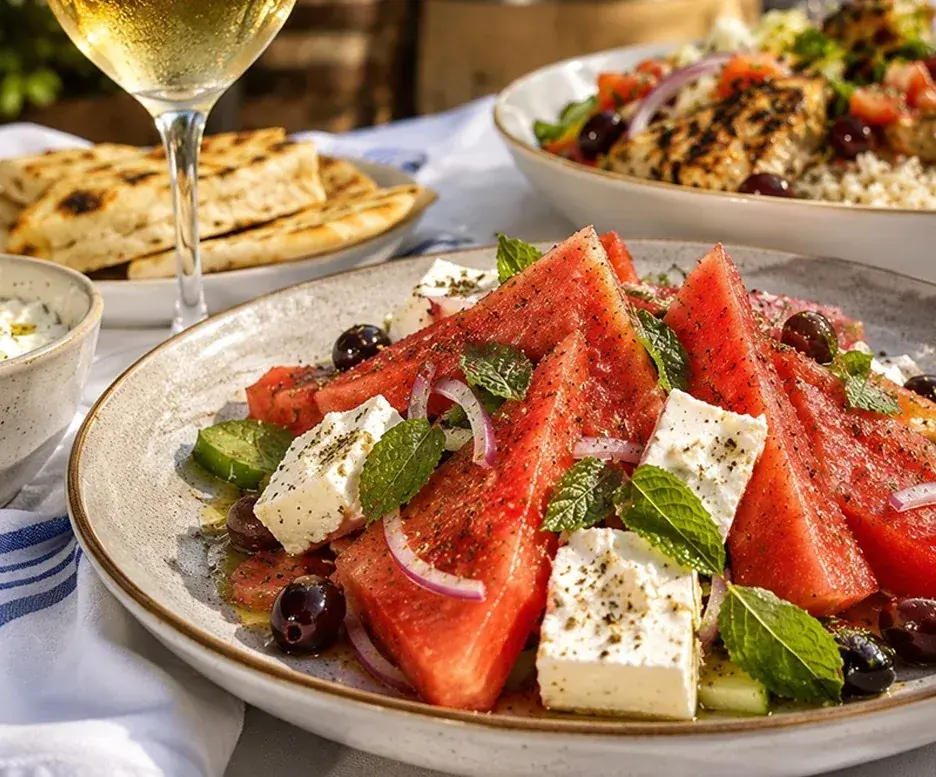
I start with the seasonal salad or a vegetable-led plate and let that choice guide everything after it. Watermelon and feta works through sweetness, salt and freshness. A more traditional salad brings tomato, cucumber, olives and cheese.
Hummus, tzatziki and baba ghanoush add chickpeas, yogurt or eggplant to the beginning. They also slow the meal down because everyone takes a little, passes the bowl and reaches for more only if they want it.
Let the grill do the heavy work
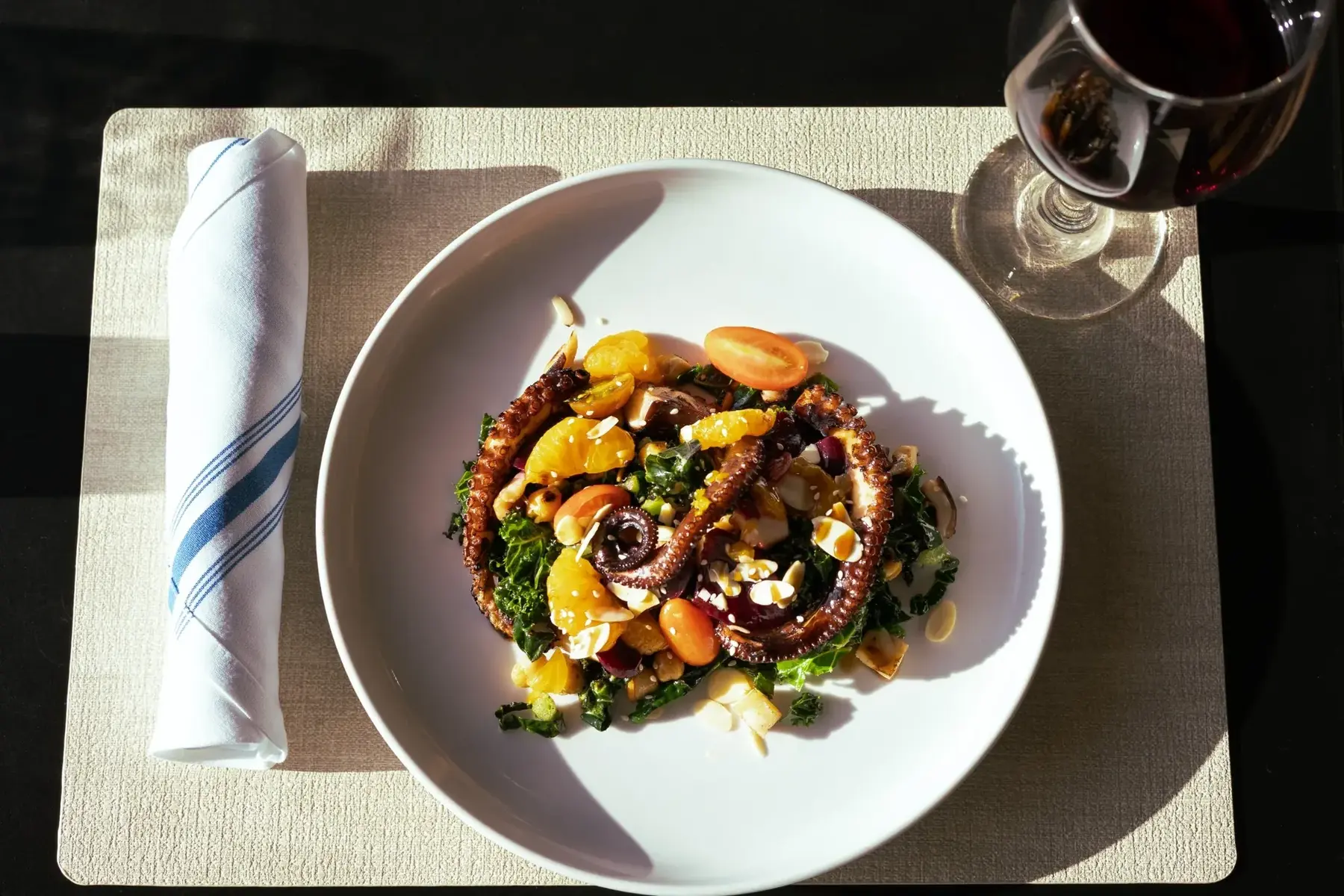
Grilled octopus, seafood or skewers give lunch a clear center without requiring a plate built around fried food. Char brings bitterness and smoke; lemon and herbs pull the flavor back toward the coast.
A richer dish still has a place. Moussaka and lamb shank belong to the same kitchen, especially when the weather or appetite calls for them. I simply do not order every rich dish at once.
The pattern matters more than the slogan
Researchers use the phrase Mediterranean diet for broad eating patterns, but a restaurant dinner cannot prove a medical outcome. What a menu can offer is choice: vegetables, legumes, yogurt, seafood, grilled meats, bread and olive oil in combinations that guests control.
My rule is modest: put several kinds of food on the table, share them and stop treating the entrée like the only plate with a job.