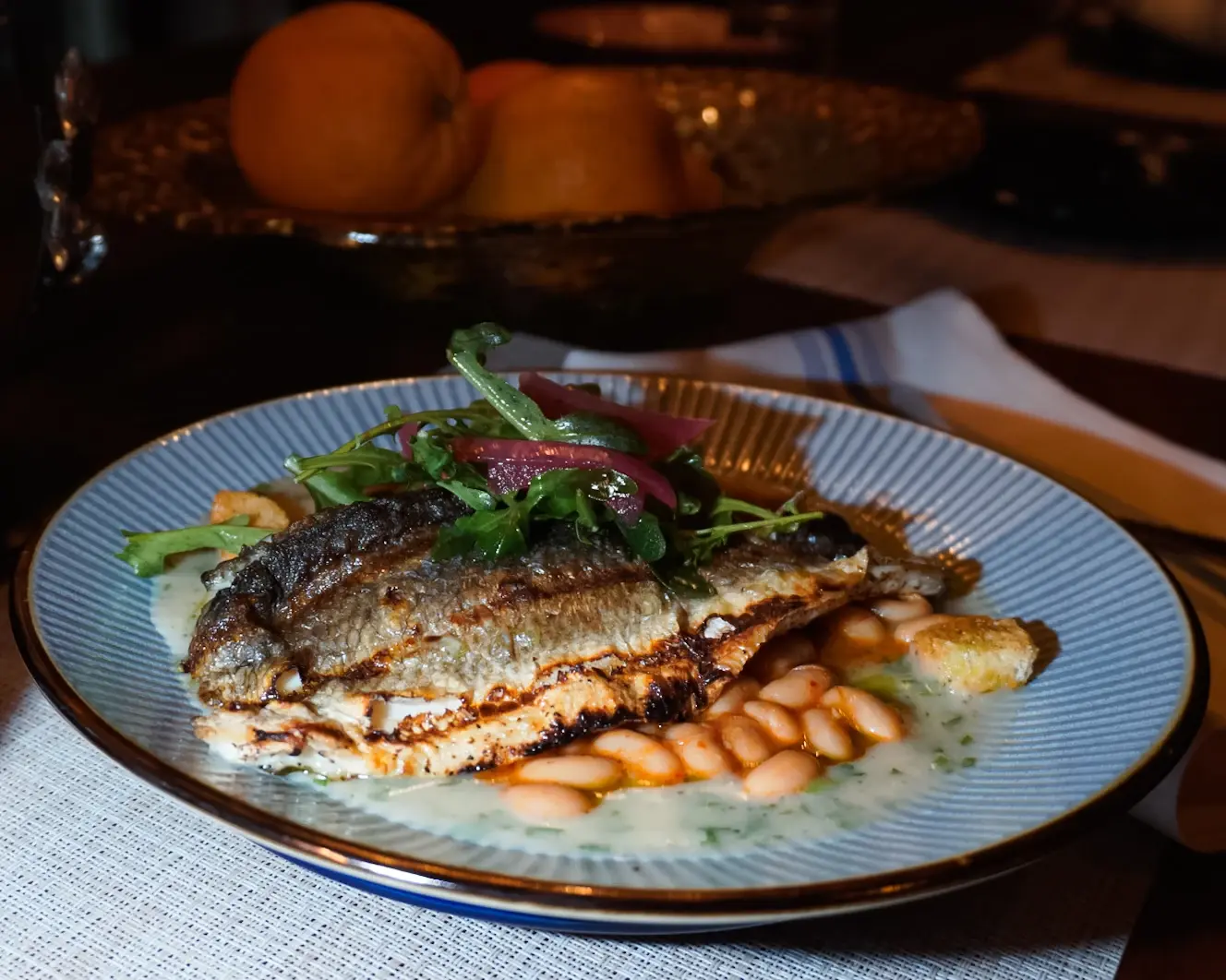
I go to Alesta after the coast, when cold air has sharpened my appetite but the drive to Santa Rosa is not over. The menu can answer that moment in two very different ways.
Branzino, salad and meze keep lunch bright. Manti, Iskender and lamb shank make it warmer and slower. I order for the afternoon I want afterward.
A fish plate that still feels cooked
Branzino can become bland when a kitchen treats it as the virtuous choice. Alesta gives the skin color and crispness, then builds the plate with sauce, beans and greens. It tastes like lunch, not an obligation.
People return because the food is good enough to want again. A well-cooked fish beats a menu full of claims about being clean.
Two culinary languages share the room
One side of Alesta’s cooking shows French technique in sauces, texture and plating. The other draws from Turkish and Middle Eastern traditions: dough, yogurt, tomato, spices and slow-cooked meat.
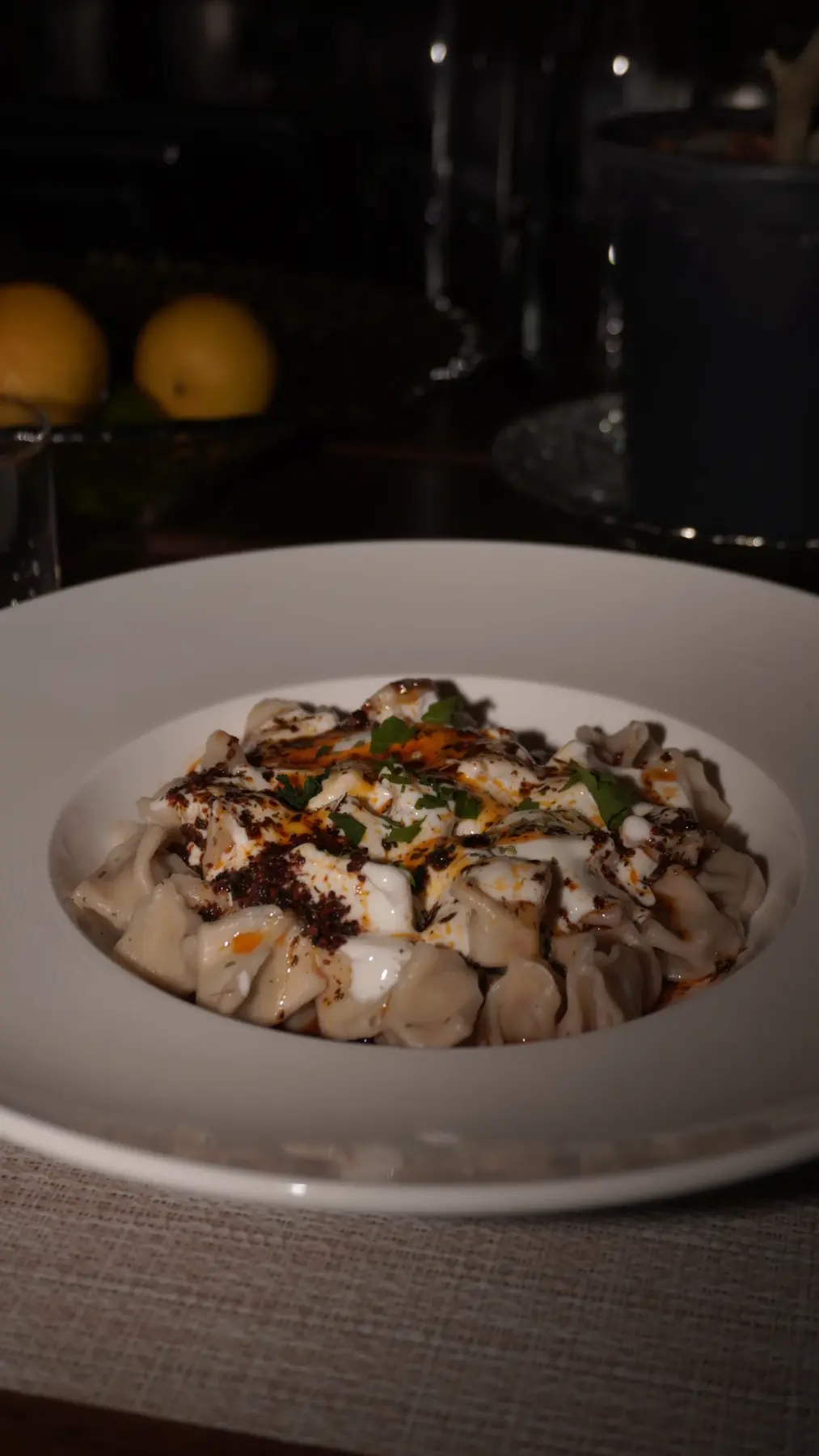
Meze and salads can begin either kind of meal. From there, I choose one direction. Fish and vegetables when the day continues. Manti or lamb shank when dinner is the final destination.
A good pattern has room for appetite
Any diet that treats satisfaction like a mistake will eventually lose. At Alesta, some days call for branzino and salad; others call for lamb, yogurt and bread.
The continuity comes from returning to vegetables, legumes, herbs, olive oil and food cooked with attention. One meal does not need to represent an entire philosophy.