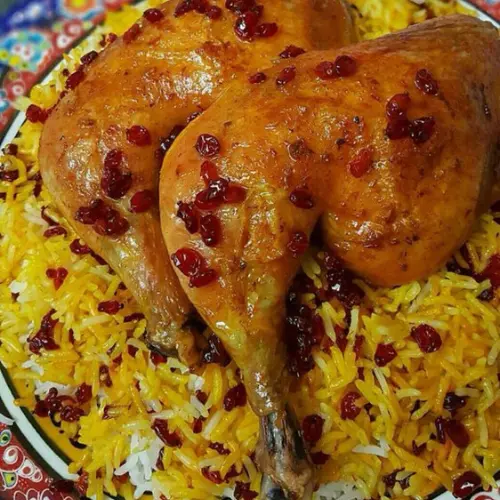
Persian food often announces itself through rice. The grains are washed, soaked, parboiled and steamed with care; saffron colors only part of the platter, making the fragrance more noticeable. A crisp tahdig may sit underneath.
Kabobs are the direct side of the cuisine. Stews are the slower side. Herbs, dried lime, walnuts, pomegranate and barberries keep the table from becoming only meat and rice.
How it tastes
Persian, in four cues.
Fragrance
Saffron, rose water and cardamom are used with restraint so aroma arrives before sweetness.
Tartness
Barberries, dried lime, pomegranate and sour grape interrupt rich food.
Herbs
Fresh and cooked herbs appear by the handful, not as garnish.
Fire
Kabobs bring onion, saffron and smoke to the center of the plate.
At the neighboring table
How Persian differs nearby.
Persian and Spanish cooks both prize saffron and rice, but Persian rice seeks separate grains and a distinct crust while paella binds stock and rice in one pan.
Compared with Levantine mezze, Persian meals give a larger role to rice platters and herb-heavy stews.
Dish histories
The stories carried by Persian food.
Koobideh
Seasoned ground meat pressed around a skewer turns modest ingredients into a test of texture, fire and timing.
Zereshk Polo Ba Morgh
Tart barberries scattered across saffron rice make the chicken plate festive without turning it sweet.
Fesenjoon
Walnuts and pomegranate cook down into a dark sauce whose balance changes from tart to sweet by region and family.
Ghormeh Sabzi
Herbs, beans and dried lime need time to settle into one flavor. It is a poor dish to rush and an excellent one to share.
Twenty stories connect food history to menus in Sonoma and Marin where these dishes can be ordered today.
Open the dish index ↗First visit
Your first Persian table.
- Koobideh
- Joojeh kabob
- Zereshk Polo Ba Morgh
- Fesenjoon
- Ghormeh Sabzi
Where to try it