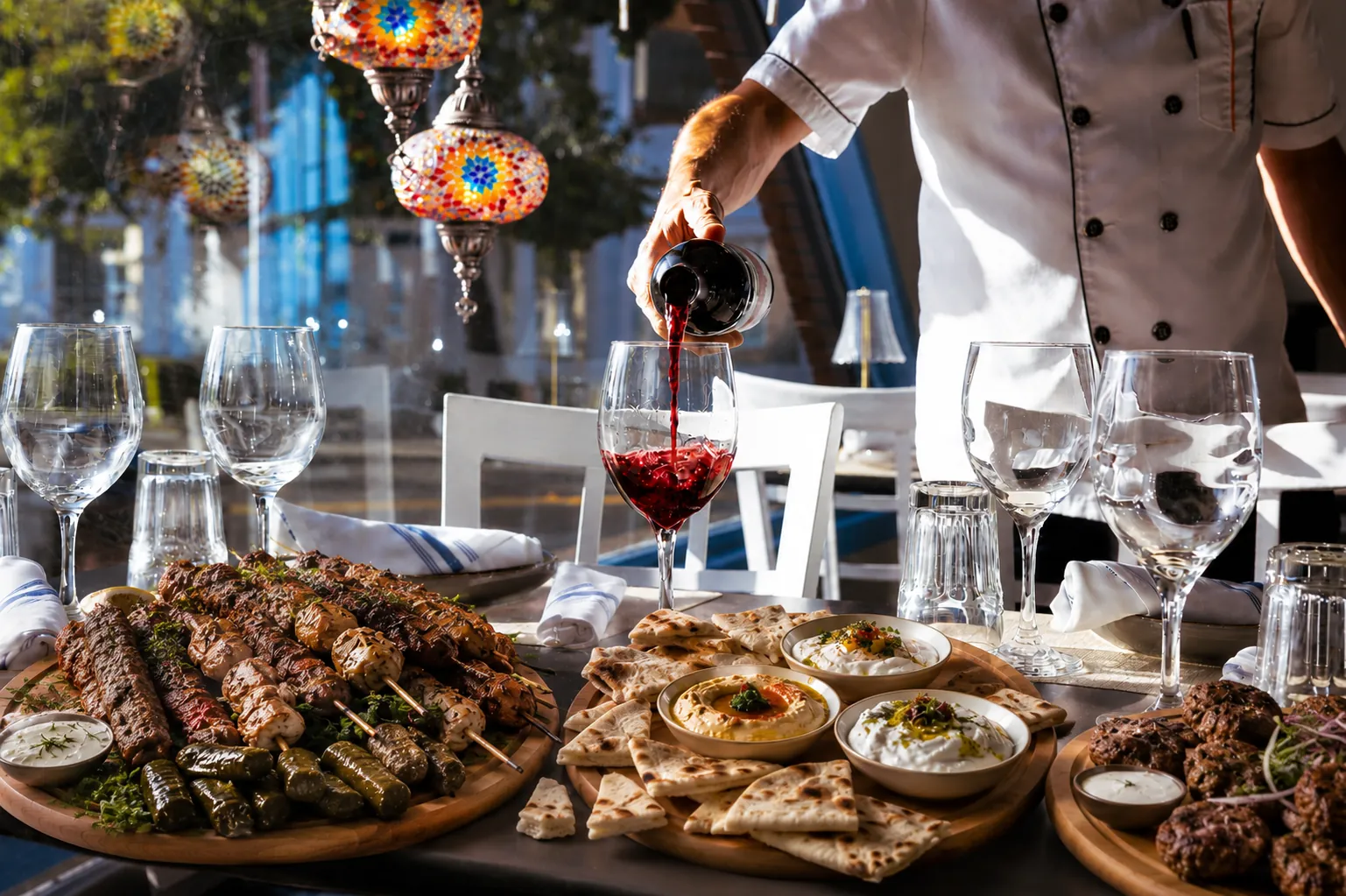
The word Mediterranean is convenient on a restaurant sign and imprecise at the table. It can describe food from Spain, Greece, the Turkish coast, the Levant, North Africa and dozens of islands between them. Olive oil, wheat, grapes, seafood, sheep’s milk, citrus and herbs travel across those places, but the balance changes from one shore to the next.
A Greek plate may lean on lemon, oregano and feta. An Anatolian table can move from yogurt and grilled meat to pepper pastes, dough and warm spice. Levantine meals make room for herbs, tahini, sumac and many small dishes. Spain brings cured pork, smoked paprika and rice. Coastal menus follow the day’s catch more closely than any national border.
How it tastes
Mediterranean regions, in four cues.
Greek
Bright with lemon, olive oil and herbs; salty cheeses and grilled food keep the flavors direct.
Anatolian
Yogurt, tomato, pepper, lamb, dough and charcoal make a warmer, deeper table.
Levantine
Fresh herbs, tahini, chickpeas, sumac and pomegranate create contrast without heaviness.
Spanish Mediterranean
Olive oil, garlic, saffron, smoked paprika, rice and preserved foods build concentrated flavor.
Coastal
Fish, octopus and shellfish meet acid, herbs and fire; freshness matters more than ornament.
At the neighboring table
How Mediterranean regions differs nearby.
Greek and Levantine tables both use yogurt, herbs and grilled food, but Greek cooking often feels more spare while Levantine mezze widens the number of textures on the table.
Anatolian and Greek cooking overlap after centuries of movement around the Aegean. Names, fillings and techniques cross borders; local histories still matter.
Spanish rice dishes and eastern Mediterranean pilafs begin from different grain traditions. Paella cooks flavor into a broad, shallow pan. Pilaf is usually built around separate, carefully cooked grains.
Dish histories
The stories carried by Mediterranean regions food.
Moussaka
The modern Greek version, layered with eggplant, meat and béchamel, became internationally familiar in the twentieth century. Related baked eggplant dishes travel through the former Ottoman world with very different shapes.
Manti
Small filled dumplings appear across Central Asia and Anatolia. Turkish versions are often served with garlic yogurt and spiced butter, turning a small parcel of dough into a complete, warming dish.
Hummus
Chickpeas and sesame have long histories in the eastern Mediterranean. The exact birthplace of hummus is debated; today it belongs to several living food cultures and should not be flattened into a single origin story.
Paella
Paella grew from Valencia’s rice country. The pan gave the dish its name, and local versions were shaped by what farmers and cooks had close at hand before seafood paella became a coastal emblem.
Grilled octopus
Drying or tenderizing octopus before grilling answers a practical coastal problem: how to turn a muscular animal into something tender while keeping the taste of the sea.
Twenty stories connect food history to menus in Sonoma and Marin where these dishes can be ordered today.
Open the dish index ↗First visit
Your first Mediterranean regions table.
- One mezze or dip
- One dish from the grill
- One slow-cooked plate
- One vegetable or salad with acid
- Bread for the table
Where to try it
Mediterranean regions in this guide.
Greek, Spanish, Turkish and seafood boards built for sharing.
Open ↗SebastopolAlesta Modern MediterraneanFrench technique beside Turkish and Middle Eastern comfort dishes.
Open ↗Santa RosaZamZamHalal gyros, shawarma, rice plates, falafel and Afghan specialties.
Open ↗