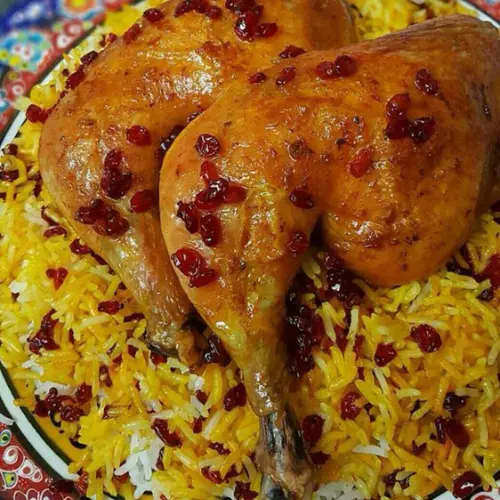
Saffron begins as a thread, not a yellow powder. A small pinch is bloomed so its aroma and color can travel through a much larger pot of rice. The result should smell floral and warm, never like perfume poured over dinner.
Persian rice cookery treats each grain seriously. Long-grain rice is rinsed, parboiled, drained and steamed. The aim is separation: grains that remain distinct even when butter, saffron or the juices from a stew reach them.
Gold is only one color
Zereshk polo adds ruby barberries, whose tartness cuts through butter and roast chicken. Plain chelo gives grilled meat a quiet base. At the bottom of the pot, tahdig turns rice into a crisp, coveted crust.
Saffron matters because it can mark a special table without making the rice heavy. A few golden spoonfuls scattered across white rice are often enough.
What to notice
- Separate, elongated grains
- A floral aroma without bitterness
- Tart barberries or crisp tahdig when offered