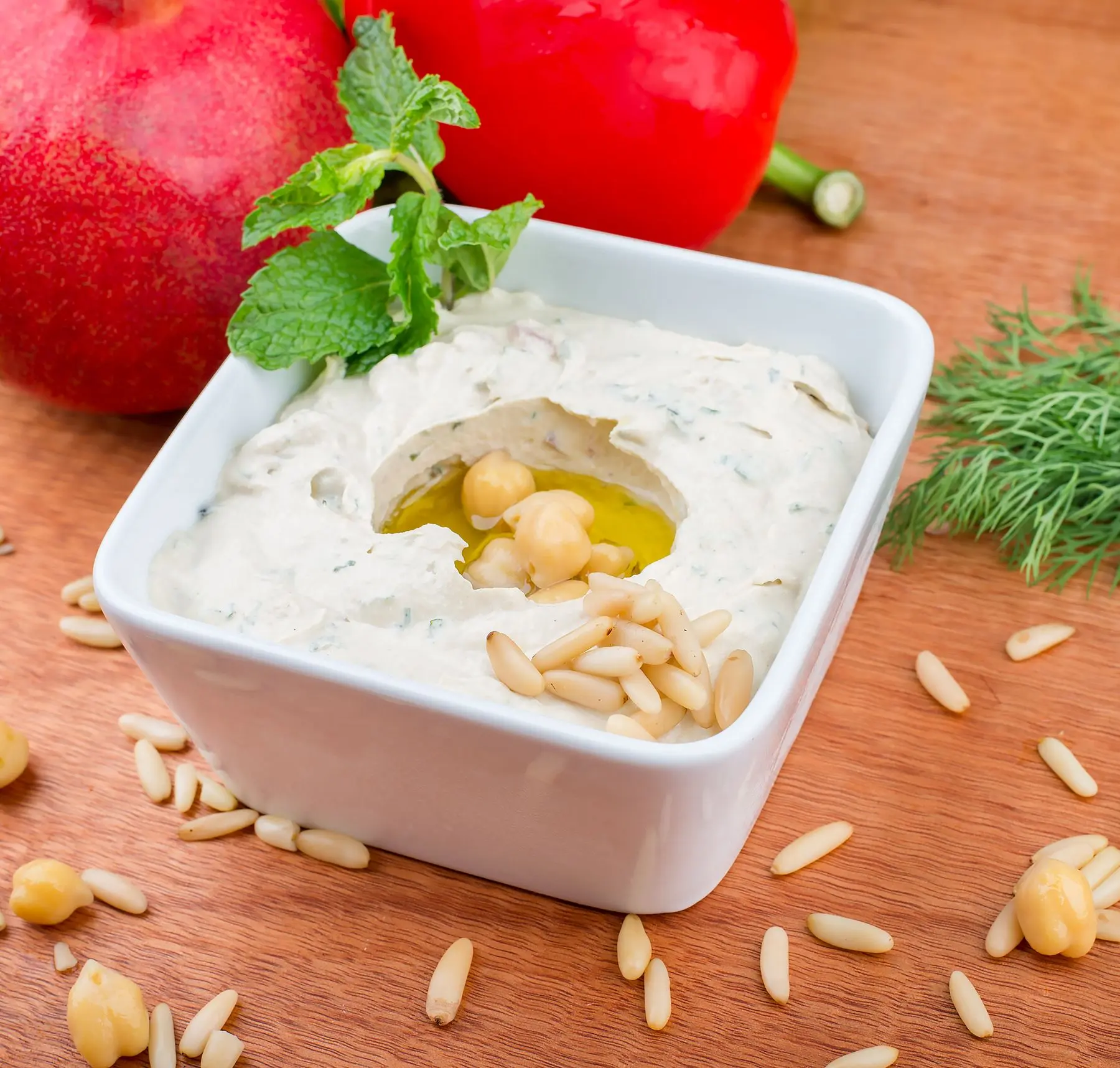
Hummus means chickpeas in Arabic, but the bowl is more than its main ingredient. Tahini gives it depth, lemon gives it lift, and the cook decides whether the texture should be rustic, airy or almost satin.
Claims about a single birthplace quickly become political. Chickpeas and sesame have long histories across the region, and closely related preparations belong to several modern cuisines. The honest story is shared, old and still evolving.
Texture tells the story
Some kitchens peel the chickpeas; others rely on long cooking and a strong blender. Ice water can lighten the mixture. Warm chickpeas can make the bowl feel less like a refrigerated dip and more like food just prepared.
Drag bread through the center and catch olive oil, spice and chickpea in one pass. The garnish should add a note, not bury the hummus.
What to notice
- Creaminess without pastiness
- Tahini you can taste
- Lemon and garlic that leave room for chickpeas