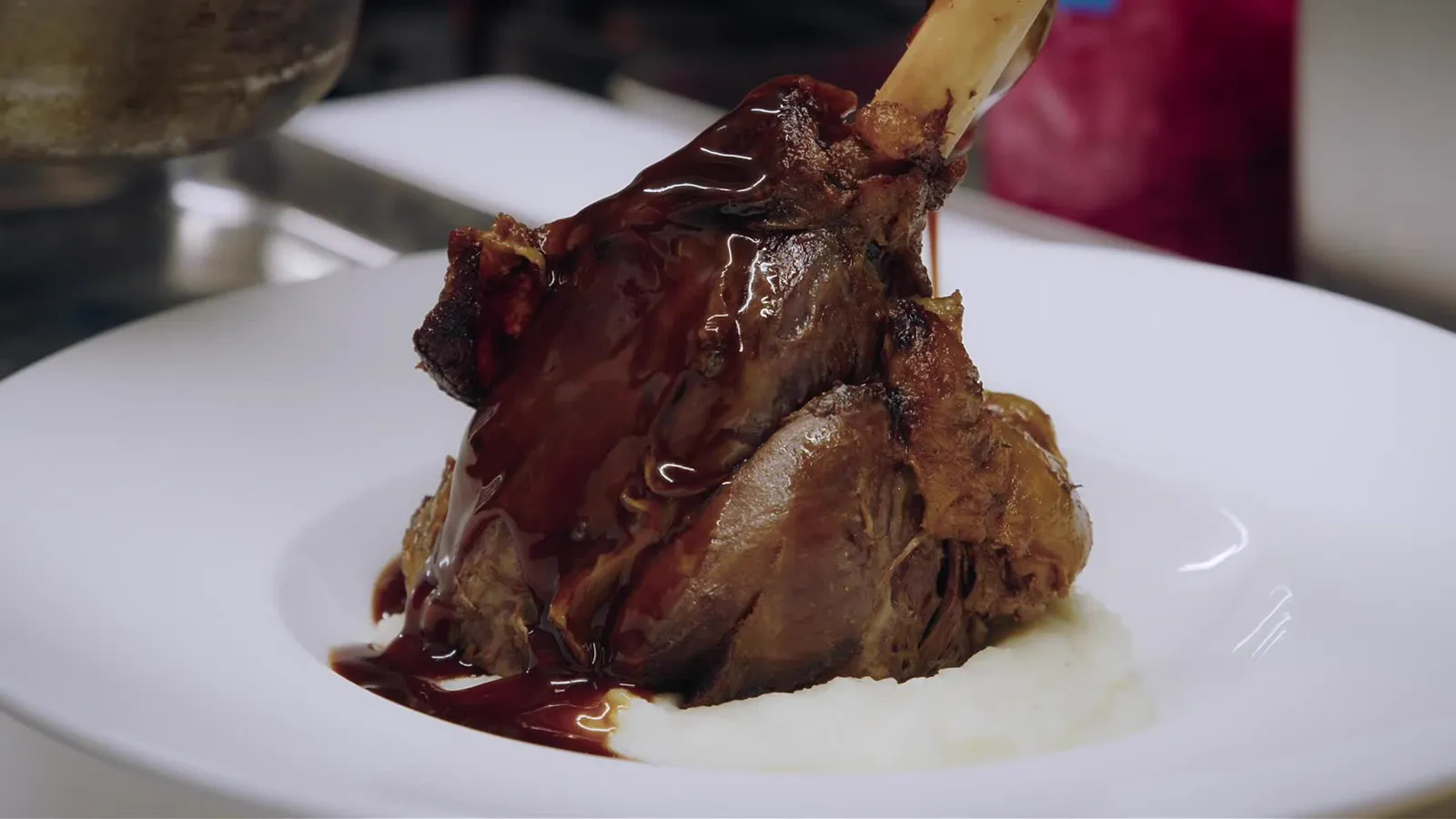
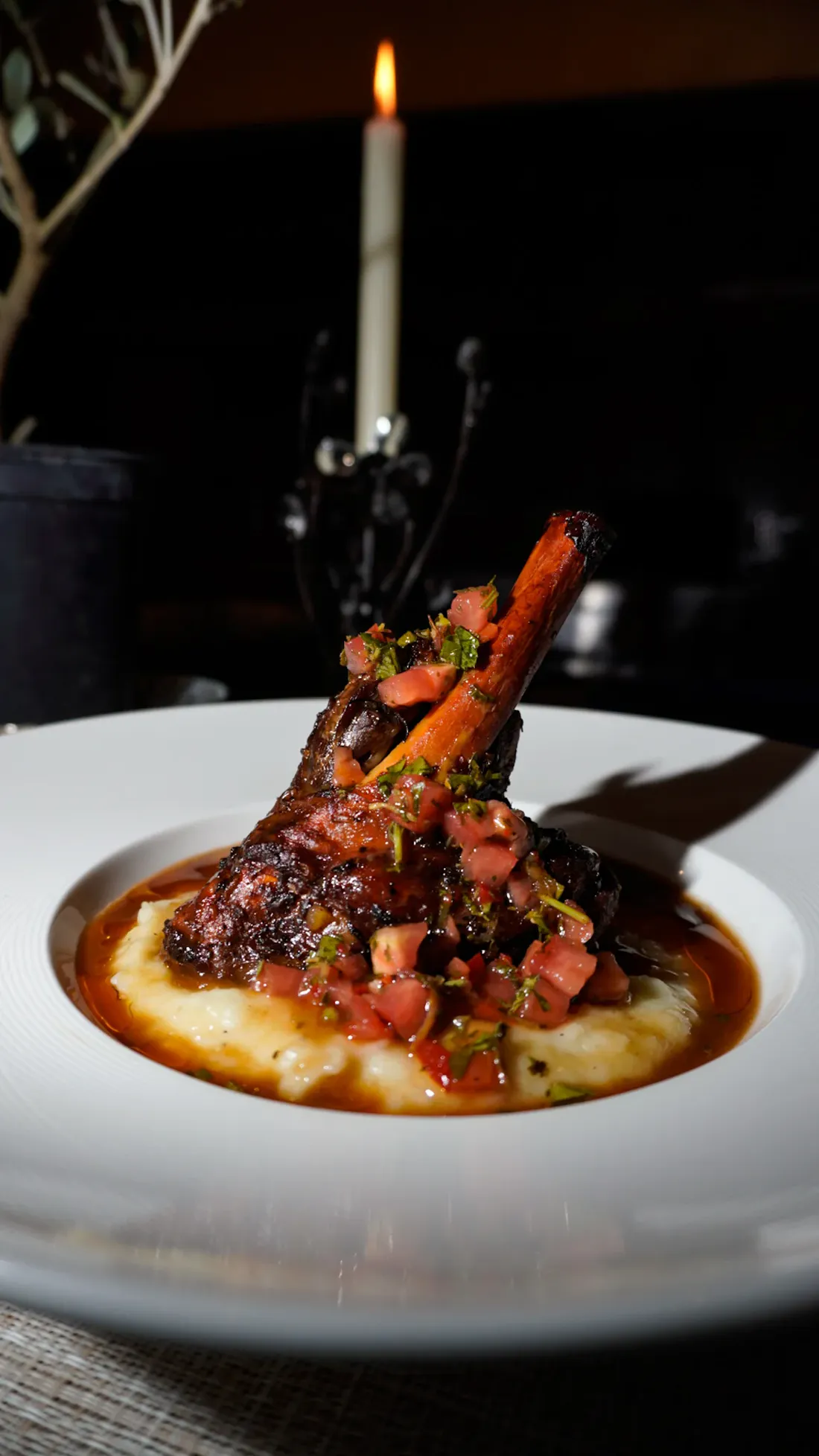
Some dishes are built for the first ten minutes at the table. Lamb shank is built for the last hour of the day. At Alesta Modern Mediterranean in Sebastopol it arrives standing up: a single shank on a bed of mashed potatoes, the bone pointing at the ceiling, the meat dark and glossy with jus, something green and bright scattered over the top.
The shank is the lower part of the leg, below the knee. It's a hard-working muscle wrapped in connective tissue, which is why it is tough if you rush it and remarkable if you don't. Put it on a grill and you will be chewing for a while. Give it hours of low, wet heat and the collagen that held it together melts into gelatin. The meat loosens around the bone, and the cooking liquid turns silky enough to coat a spoon.
That's the whole idea of the dish, and the reason it has lasted in so many kitchens for so long. You take the cut nobody fights over, add time, and end up with the plate everybody wants.
The cut nobody fights over.
The plate everybody wants.
A long history in a short cut
Lamb shank has never belonged to one country. For as long as people have raised sheep around the Mediterranean, the Balkans and the Middle East, cooks have had the same problem: one animal, a few prized cuts, and a lot of tough, bony pieces that still had to feed a family. Almost everywhere, the answer was a pot, a low fire and patience.
In Greece, lamb slow-cooked in a sealed pot or parcel is called kleftiko. The name comes from the klephts, the mountain bandits of the Ottoman era, and the story told in Greek kitchens is that they cooked their meat in sealed pits so no smoke would give their camp away. Whether or not it happened quite like that, the method stuck: seal it, leave it, wait.
In Turkey, braised lamb shank is kuzu incik, a fixture of home kitchens and of the lokantas that cook like home, usually braised with onion, tomato and vegetables until the meat comes away with a spoon. Across the Balkans the same instinct shows up in clay pots and one-pot stews that go into a slow oven in the morning and come out at night. Further east, Persian cooks make mahicheh, lamb shanks braised with onion, turmeric and saffron.
In northern Italy the shank is the star of ossobuco, traditionally made with veal and finished with gremolata, a fine chop of parsley, lemon zest and garlic. Keep that word in mind. It comes back on Alesta's plate.
Over the last few decades, braised lamb shank moved from home kitchens onto restaurant menus all over the world, from European bistros to American steakhouses. It's an easy dish to put on a menu and a hard one to make memorable, because so many versions taste alike: brown, soft, a little sweet, a lot of sauce. The kitchens that stand out are the ones that change something.
Why Alesta braises it in cola
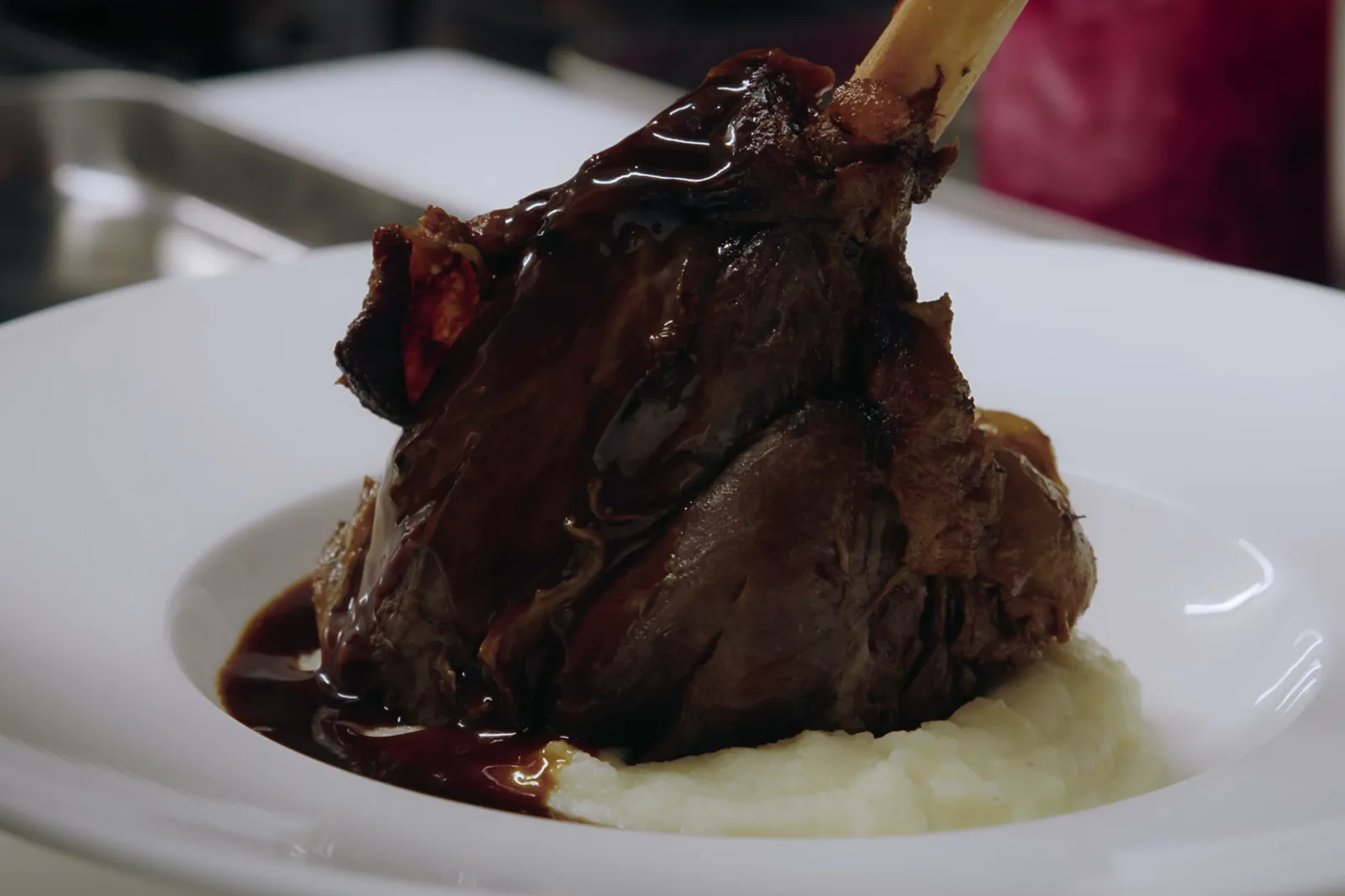
At Alesta, the something is cola. The dish on the menu is the Cola Braised Lamb Shank, and it's the clearest example of what the restaurant means by modern Mediterranean: a dish with very old roots, cooked with an idea that belongs to now, and to this side of the Atlantic.
Cooking meat in cola is an American home-kitchen tradition. Southern cooks have glazed hams with it for generations, and cola-braised short ribs and pot roasts turn up in plenty of American kitchens. It sounds like a gimmick until you think about what's actually in the can.
- Sugar. Over a long braise it caramelizes and reduces, which gives the jus its dark color and glossy body, much like a long reduction of stock or wine, only rounder.
- Acidity. Cola is surprisingly acidic. In the pot, that acidity balances the richness of lamb fat, so the finished sauce tastes deep rather than heavy.
- Spice. The flavor of cola itself is built from warm notes like vanilla, citrus and baking spices. In a braise those notes melt into the background instead of standing out, and they happen to suit lamb.
What the cola doesn't do is make the sauce taste like soda. After hours on the heat with lamb, it disappears into the background. What's left is a darker, rounder jus than you would get any other way.
The real tenderizer is still time. Low heat, a covered pot and hours of patience are what turn collagen into gelatin. The cola changes what the meat is sitting in while that happens, and that turns out to matter a lot.
The spice blend nobody writes down
Cola is the part of the recipe Alesta is happy to print on the menu. The spice blend is the part it isn't. The kitchen seasons the shank with a blend taken from old European recipes, and that is as far as the description goes. Ask for the exact list and you won't get one.
I like that. Most braises lean on the same handful of seasonings, and you can usually name them from the first bite. Here the cola and the spices work together, so the sauce tastes familiar and hard to place at the same time. You know it's lamb, you know it has been cooking for a long time, and you can't quite say what makes it taste like that.
It also fits the restaurant. Alesta has two chefs, Ugur and Kadir, and one kitchen: Turkish, Greek and Balkan dishes, Sonoma ingredients, and a willingness to change a classic when the change makes it better. The lamb shank sits right in the middle of that. It's a dish every Mediterranean grandmother would recognize, cooked in a way none of them would have tried.
What's on the plate
The menu describes it in one line: mashed potatoes, lamb jus, gremolata, pickled peppers, porcini salt. Every part of that line has a job.
- Mashed potatoes. The base. They soak up the jus, so the last forkful of potato is as good as the first bite of lamb.
- Lamb jus. The braising liquid, reduced until it shines. This is where the cola and the spice blend live.
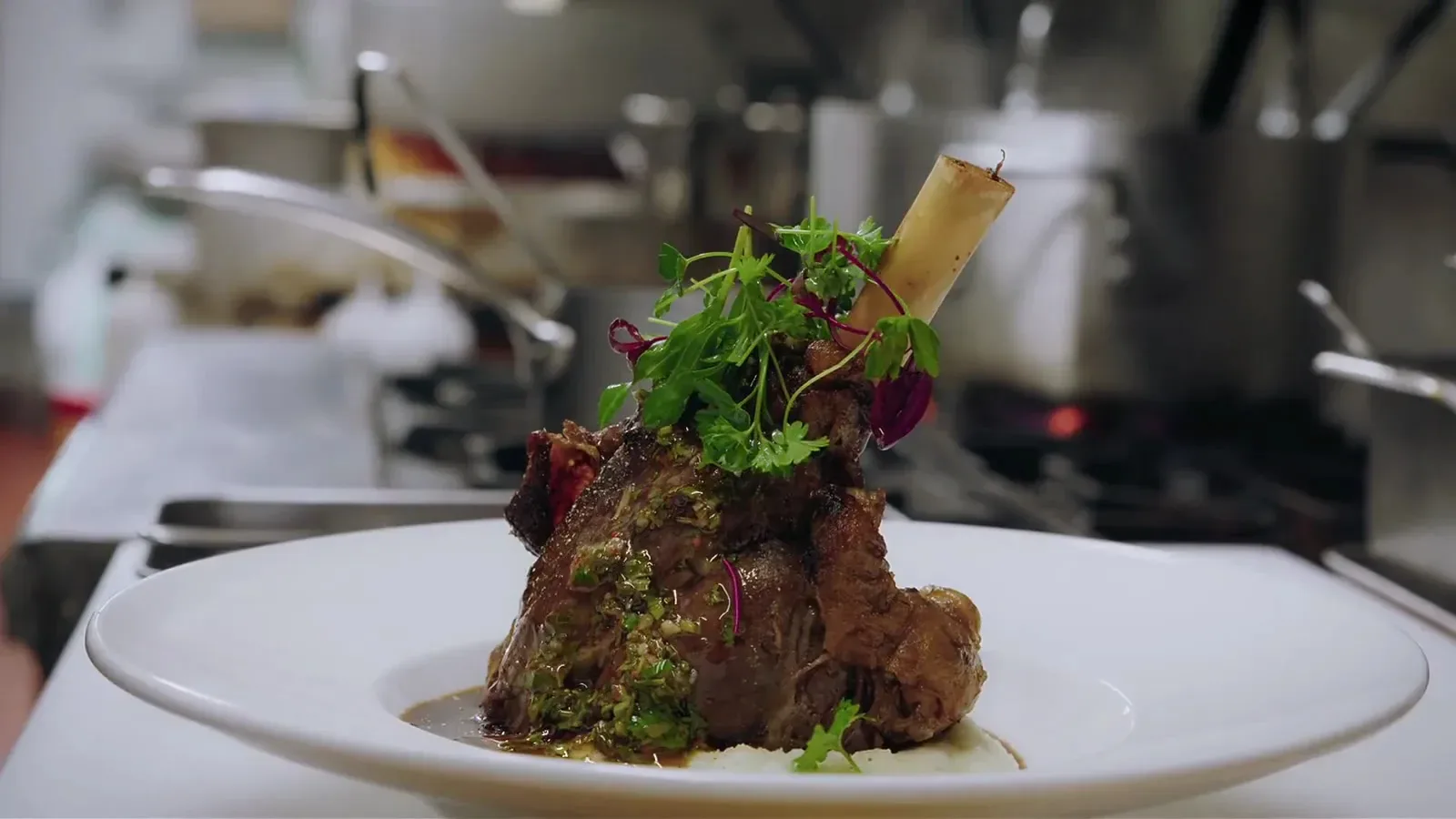
- Gremolata. Classically parsley, lemon zest and garlic, chopped fine, the same finish Milan has put on ossobuco for generations. After hours of slow cooking, it wakes the plate up.
- Pickled peppers. Sharp and bright. A bite between forkfuls of lamb resets your palate.
- Porcini salt. Usually made by grinding dried porcini with salt. It adds an earthy, savory depth, the mushroom note that rounds out the jus.
The shank is marked gluten-free on the dinner menu, and it was $38 when I checked in November 2026. It's a whole shank on the bone, so plan on taking your time with it.
Is it good for you?
Lamb shank isn't diet food, and nobody should pretend it is. It is honest, nourishing food, though, and there are good reasons it has carried people through winters for centuries.
- Protein. Lamb is a complete protein, with all the essential amino acids the body can't make on its own, and a shank is a generous portion of it.
- Iron, zinc and B12. Red meat such as lamb is one of the richest sources of heme iron, the form the body absorbs most easily, along with zinc and vitamin B12.
- Collagen turned into gelatin. The connective tissue that makes the shank tough when raw becomes gelatin in a slow braise. That gives the jus its body, and gelatin is rich in amino acids such as glycine.
- Something fresh on top. The parsley and lemon in gremolata and the pickled peppers bring freshness, acidity and a little vitamin C to a rich plate.
- Gluten-free. The dish is marked GF on the menu, which makes it an easy main course for guests who avoid gluten.
The cola does add sugar to the sauce, and the plate is rich. The Mediterranean answer to that has always been balance rather than avoidance: share a salad, start with vegetable mezze, and make the shank the center of a slow dinner rather than something eaten in a hurry. If that way of eating interests you, I wrote more about it in the modern Mediterranean table.
How I eat it
I order the lamb shank later in the day, when there's nowhere else to be. That's the right time for it.
Start with something cool and bright to share. The Atom is whipped labne with isot brown butter and sweet pepper relish; the sweet potato hummus comes with crème fraîche. The Mediterranean salad, with beets, honey yogurt, arugula, walnut and orange, is a good partner too, because it brings acid and crunch to the table before the rich part arrives.
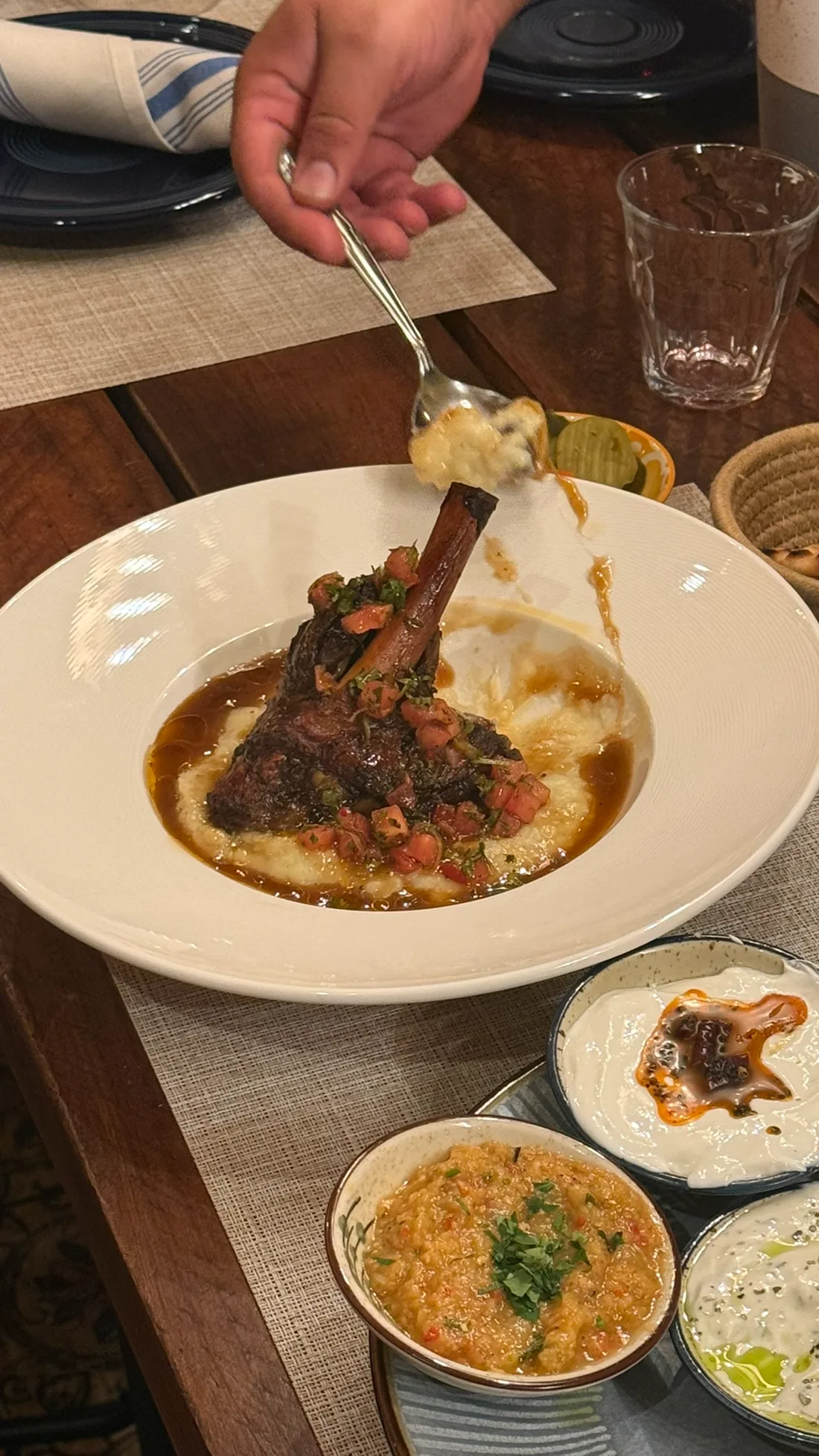
When the shank arrives, don't attack it from the top. Work the meat away from the bone with your fork, drag each piece through the jus and the mash, and take a little gremolata and a piece of pickled pepper with it. Save the last of the jus for the potatoes.
For wine, ask your server. Alesta's list pairs Greek and Turkish bottles with Sonoma County wines, and this is a dish that wants a red with some structure.
Questions people ask
What is cola-braised lamb shank?
A lamb shank, the lower part of the leg, cooked slowly in a covered pot with cola in the braising liquid. The cola's sugar reduces into a dark, glossy jus, and its acidity balances the richness of the lamb.
Is Alesta's lamb shank gluten-free?
It's marked gluten-free (GF) on the dinner menu. Tell your server about allergies before you order.
When can I order it?
It's on the dinner menu, served every day from 5 to 9 PM.
Can I get it delivered?
Alesta's delivery covers the lunch menu only, every day from 11 AM to 4 PM, so the lamb shank is a dish for the dining room.
Do I need a reservation?
It's recommended, especially on weekends, and you can book on OpenTable. Walk-ins are welcome when tables are free.
Where to find it
Alesta Modern Mediterranean is at 7233 Healdsburg Ave in Sebastopol, about 15 to 20 minutes by car from Santa Rosa and a short drive from the Sonoma Coast, with free parking at the restaurant. Dinner is served every day from 5 to 9 PM, and lunch runs Thursday through Sunday from 11 AM to 5 PM. The phone number is 707 329 6533.
If you're heading back from the ocean, I wrote about that drive in From the Sonoma Coast to Sebastopol. For the rest of the menu, see the Alesta restaurant page.
Order it late. Eat it slowly.